

Why Replacement Players Matter More Than Star Absences

substitute player entering the game 300x300 - Why Replacement Players Matter More Than Star AbsencesWhen a star player is ruled out, betting markets react fast. Headlines follow, social media panics, and the thrill of live plays often pushes bettors to act before thinking. Lines move sharply, sometimes within minutes. The assumption is simple: star out equals team worse. Sometimes that’s true. Often, it’s overstated. In reality, the impact of an absence is rarely about the missing star alone. It’s about who replaces them, how that player fits the system, and whether the market understands the difference. For bettors, this distinction matters more than almost anything else related to injuries.

The Star Absence Trap

Star players attract attention because they’re easy to quantify. Points per game. Usage rate. Highlight reels. When they’re gone, it feels like a massive downgrade. Sportsbooks know this. So do casual bettors. That’s why lines often move aggressively when a star is ruled out, even before the replacement role is fully understood. The market reacts to the name, not the structure. But games aren’t played by names. Lineups, rotations, and roles in which they play. A star’s absence creates a vacuum, not just a loss. How that vacuum is filled determines the real impact.

Depth Analysis Beats Name Recognition

Depth is one of the least appreciated edges in betting. Teams with substantial depth can absorb star absences far better than teams that rely heavily on one or two players. The drop-off isn’t linear. Sometimes it’s barely noticeable. Depth matters because:
  • Minutes are redistributed, not erased.
  • Bench players are often specialists.
  • Coaches can adjust rotations creatively.
  • Energy levels can improve with fresher legs.
A team losing a 35-minute star might replace them with two players splitting the role. Individually, neither matches the star’s production. Collectively, they might match or even exceed it in specific matchups. Markets often fail to price this nuance correctly. They treat all-star absences as equal shocks.

Replacement Players Are Often Misunderstood

Replacement players aren’t random. They’re professionals who practice the same system every day. Many have clearly defined skill sets that don’t show up in box scores. When thrust into larger roles, some replacements benefit from:
  • Simpler responsibilities
  • Increased usage efficiency
  • Better matchup opportunities
  • Lower defensive attention
A star often carries defensive pressure that replacement players don’t. That changes shot quality, spacing, and decision-making. In some cases, offenses become more balanced. Ball movement improves. Defensive predictability increases. This doesn’t mean losing a star is good. It means the net effect is context-dependent, not automatic decline.

System Fit Matters More Than Raw Talent

One of the biggest mistakes bettors make is evaluating players in isolation. Raw talent doesn’t determine impact. Fit does. Some systems are plug-and-play. Others are star-dependent.
For example:
  • A motion-heavy offense may function smoothly with different personnel.
  • A heliocentric system may collapse without its primary creator.
  • Defensive schemes may hide individual weaknesses better than others.
If a replacement player fits the system’s demands, the drop-off can be minimal. If they don’t, even a modest absence can be devastating. Sportsbooks don’t constantly adjust enough for system fit, especially on short notice. This is where informed bettors can find value by understanding how teams operate, not just who is missing.

Why Bookmakers Often Misprice Injuries

Bookmakers face a tricky balance. They must react quickly to injury news while managing public perception. When a star is ruled out:
  • Public bettors expect a move.
  • The media amplifies the impact.
  • Delayed adjustment looks incompetent.
So books often move lines decisively, sometimes conservatively, to protect against public money. That creates mispricing when:
  • The replacement is competent.
  • The role is reduced rather than replicated.
  • The system adapts effectively.
  • The opponent matchup favors the replacement skill set.
In other words, the market moves for optics as much as accuracy. Sharp bettors look for spots where the line moved more than the actual on-court impact suggests.

Short-Term vs Long-Term Absences

Replacement impact is often most substantial in the short term. Early games after a star’s absence can catch the market off guard. Roles are fresh. Energy is high. Game plans are simplified. Over time, opponents adjust. Weaknesses get exposed. Efficiency drops. This is why betting immediately after injury news can differ from betting weeks later. Markets tend to overreact early in magnitude but underreact in understanding. Bettors who can quickly analyze replacement roles can exploit that gap.

Depth Is a Hidden Predictor of Sustainability

Teams with strong replacement options tend to be more stable across a season. They weather injuries better. They maintain performance levels longer. This matters for:
  • Long-term betting strategies
  • Futures markets
  • Situational spots during compressed schedules
A team that relies heavily on one star may look dominant until that star is missing. A deeper team may look less impressive but perform more consistently. Betting markets often reward peak performance and undervalue resilience. Depth provides resilience.

Why Bettors Overvalue Stars

Stars are visible. Depth isn’t. Highlights, fantasy stats, and media coverage all center on stars. Replacement players operate quietly. That creates a bias. But teams are complex systems. Removing one part doesn’t always cause collapse. Sometimes it forces optimization. Understanding that difference separates surface-level betting from structural analysis.

When Star Absences Truly Matter

None of this means star absences are irrelevant. They matter when:
  • The star drives the entire offensive or defensive identity.
  • The bench lacks functional replacements.
  • The system is rigid
  • The opponent can exploit the weakness directly.
The key is identifying which absences change structure, not just which names disappear.

The Bottom Line

In sports betting, the absence itself isn’t the edge. The replacement is. Depth, system fit, and role redistribution determine how much an injury truly matters. Bookmakers often move lines based on perception and public expectation, not granular impact. Bettors who focus only on star names miss the real story. The better approach is more challenging but more rewarding: understand who steps in, how they fit, and whether the market has moved too far. Games aren’t decided by who’s missing. They’re decided by who plays instead.
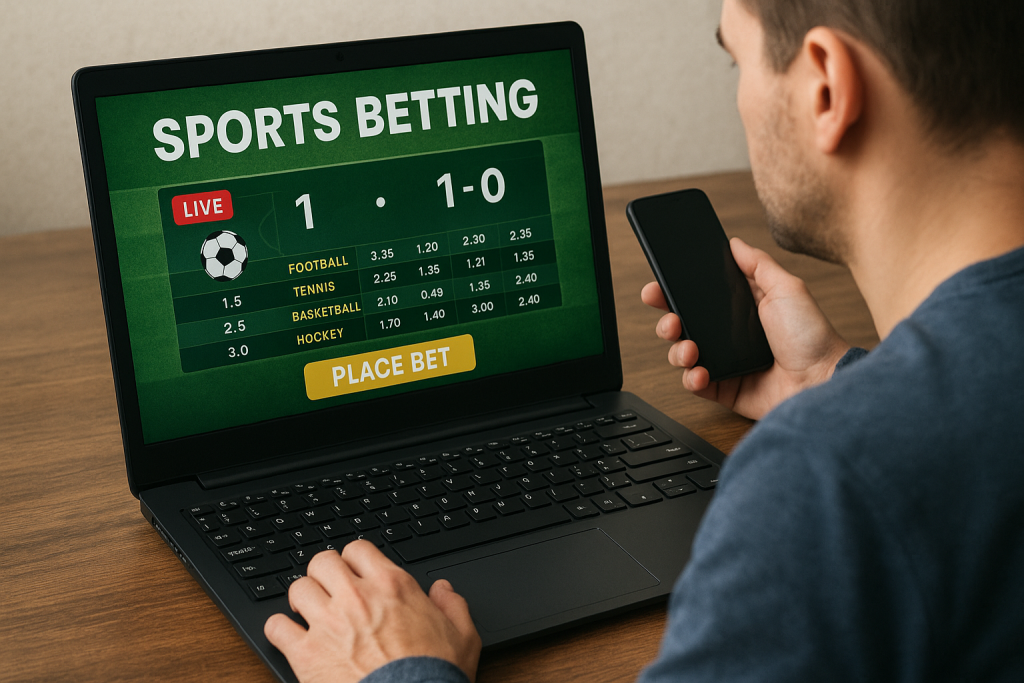

Decimal, Fractional, and American Odds Explained

sports betting 1024x683 - Decimal, Fractional, and American Odds Explained

When you bet on sports, the odds format you see can look very different depending on the sportsbook. In Europe, you’ll usually find decimal odds. In the UK, fractional odds are common. In the US, American odds dominate. With FunBet, once you understand how to read each type, switching between them becomes second nature.

Below, we’ll walk through each odds system, how to read it, and examples so you can compare them side by side.

Decimal Odds

Decimal odds are the most straightforward system. They show you exactly how much your total return will be for every unit staked, including your original bet.

  • Format: A single number, like 1.80 or 2.50
  • Used in: Europe, Canada, Australia

How to Read Decimal Odds

To calculate your return, multiply your stake by the odds.

Example 1:

  • Odds: 2.50
  • Stake: $10
  • Calculation: $10 × 2.50 = $25
  • Breakdown: $15 profit + $10 original stake

Example 2:

  • Odds: 1.80
  • Stake: $50
  • Calculation: $50 × 1.80 = $90
  • Breakdown: $40 profit + $50 original stake

Decimal odds make it easy to see the full return at a glance. If you see odds below 2.00, the team is a favorite. Odds above 2.00 mean they’re the underdog.

Fractional Odds

Fractional odds are traditional in the UK and horse racing markets. They show your profit relative to your stake.

  • Format: A fraction, like 5/2 or 7/4
  • Used in: UK, Ireland, horse racing worldwide

How to Read Fractional Odds

The first number is the profit. The second number is the stake required to earn that profit.

Example 1: 5/2 odds

  • For every $2 you bet, you win $5 profit.
  • Bet $10 → Profit = ($10 ÷ 2) × 5 = $25
  • Total return = $25 profit + $10 stake = $35

Example 2: 7/4 odds

  • For every $4 you bet, you win $7 profit.
  • Bet $20 → Profit = ($20 ÷ 4) × 7 = $35
  • Total return = $35 profit + $20 stake = $55

Even Money:

When odds are listed as 1/1, it means you win the same amount as your stake. A $50 bet at 1/1 returns $100 total ($50 profit + $50 stake).

Fractional odds can be less intuitive for new bettors, especially when the numbers get unusual (like 11/8). However, once you become accustomed to them, they clearly demonstrate value: the higher the first number compared to the second, the greater the profit potential.

American Odds

American odds, also called moneyline odds, work differently depending on whether the number is positive or negative.

  • Format: A number with a plus or minus sign, like -150 or +200
  • Used in: United States, online sportsbooks with US markets

How to Read American Odds

  • Negative odds (favorites): The number shows how much you must bet to win $100 profit.
  • Positive odds (underdogs): The number shows how much profit you win from a $100 bet.

Example 1: -150 odds

  • You need to bet $150 to win $100 profit.
  • Bet $15 → Profit = ($15 ÷ 150) × 100 = $10
  • Total return = $25 ($10 profit + $15 stake)

Example 2: +200 odds

  • A $100 bet wins $200 profit.
  • Bet $20 → Profit = ($20 ÷ 100) × 200 = $40
  • Total return = $60 ($40 profit + $20 stake)

Even Money:

When odds are listed as +100 or -100, it means the payout is the same as your stake. A $50 bet returns $100 total ($50 profit + $50 stake).

American odds take a little practice because of the positive/negative system, but once you spot the pattern, it’s easy to see whether a team is favored or the underdog.

Comparing the Three Odds Systems

Here’s how the same bet looks in all three formats:

  • Decimal: 2.50
  • Fractional: 3/2
  • American: +150

All three mean the same thing: a $100 bet returns $250 ($150 profit + $100 stake).

Favorites have:

  • Decimal odds under 2.00
  • Fractional odds like 1/2 or 4/7
  • American odds with a minus sign, like -150

Underdogs have:

  • Decimal odds over 2.00
  • Fractional odds like 2/1 or 5/2
  • American odds with a plus sign, like +200

Converting Between Odds

Sportsbooks often give you the option to switch odds formats in your account settings. But it helps to understand conversions.

  • Decimal → Fractional: Subtract 1, then turn into a fraction. (2.50 → 1.50 → 3/2)
  • Fractional → Decimal: Divide first number by second, then add 1. (5/2 → 2.5 + 1 = 3.50)
  • American → Decimal:
    • For positive odds: (Odds ÷ 100) + 1
    • For negative odds: (100 ÷ |Odds|) + 1

Final Thoughts

Odds can look intimidating at first glance, but all three systems tell the same story: how much you’ll win compared to what you risk.

  • Decimal odds show the full return in a straightforward number.
  • Fractional odds highlight profit versus stake.
  • American odds separate favorites and underdogs with minus and signs.

Once you practice reading a few examples, switching between systems becomes second nature. And no matter which format your sportsbook uses, you’ll know exactly what your potential payout looks like before you place a bet.

How Around-the-Clock Betting is Changing Indonesian Sports Gambling

luck gamblng post 300x169 - How Around-the-Clock Betting is Changing Indonesian Sports GamblingBetting has become more accessible than ever in Indonesia. With the rise of 24/7 gaming platforms, bettors no longer have to wait for specific hours to engage in sports gambling. These platforms provide constant access, making it easy for users to place bets at any time of the day. This shift is revolutionizing the local betting scene, offering new opportunities and challenges to both casual and experienced bettors.

One major player in this landscape is pg soft, a leading innovative mobile gaming solutions provider. By offering seamless access to sports betting platforms, pg soft helps Indonesian bettors connect with their favorite games around the clock. PG Soft has played a significant role in this growing trend, allowing users to bet on live events even during off-peak hours, catering to various preferences and schedules.

Convenience and Accessibility

The convenience of 24/7 gaming platforms has reshaped how people engage with sports betting. No longer restricted to specific hours or physical locations, bettors can now place wagers on their smartphones or computers from anywhere in Indonesia. This flexibility is a game changer, especially for those who prefer betting on international sports events that occur in different time zones.

  • Mobile access: Indonesian bettors can now access their favorite platforms anytime, whether they’re at home, commuting, or even at work.
  • Variety of sports: These platforms cover a wide range of sports, including football, basketball, and even eSports, ensuring that there’s something for everyone.

This level of accessibility means more people can participate in sports gambling than ever before, making it a growing industry in the country.

The Rise of Live Betting

One of the most exciting developments in the 24/7 sports gambling scene is the rise of live betting. Live betting allows users to place bets while a match or event is in progress, adding a layer of excitement and strategy. This has become particularly popular in Indonesia, where sports like football and badminton draw large audiences. Bettors can make decisions based on the live performance of teams or players, offering a more dynamic and engaging experience than traditional pre-match betting.

Platforms supported by pg soft are known for their smooth live betting interfaces. Users can follow the action in real time and adjust their bets as the game unfolds, making the entire process more interactive. This instant access to live odds and updates enhances the user experience, further fueling the popularity of 24/7 betting in Indonesia.

Impact on the Local Betting Scene

The growth of 24/7 gaming platforms has significantly impacted the local betting scene. With more people accessing these platforms anytime, the industry is seeing increased engagement and higher betting volumes. This is not just limited to sports events; many platforms offer casino games, poker, and virtual sports, providing various entertainment options.

  • Economic impact: The rise of 24/7 platforms has created jobs and opportunities within the gaming sector, from customer support roles to software development.
  • Regulatory challenges: With this growth comes the challenge of regulating the industry. Indonesia’s gambling laws are strict, and while many platforms operate legally offshore, there’s an ongoing debate about how to manage this surge in online gambling.

The ability to bet at any time has also raised concerns about gambling addiction. Easy access and continuous availability may lead to problem gambling for some individuals. As a result, there are growing calls for responsible gambling measures, including setting betting limits and offering support for those at risk of addiction.

The Future of 24/7 Betting in Indonesia

As 24/7 gaming platforms continue to grow, it’s likely that the Indonesian sports gambling industry will see further expansion. More companies are expected to enter the market, and the demand for mobile-friendly platforms like those offered by pg soft will continue to rise. We can also expect innovations in areas like virtual reality betting and artificial intelligence-driven odds, which will enhance the user experience even more.

However, the future also hinges on how the government regulates these platforms. While some see the potential for increased tax revenues and economic growth, others are concerned about the social impact of widespread gambling. Striking a balance between growth and responsible gaming will be key to the sustainable development of this industry.

Key Trends to Watch:

  • Growth of mobile betting: With smartphone penetration rising, mobile betting will continue to dominate the market.
  • Expansion of eSports betting: As eSports gains popularity, expect more platforms to offer around-the-clock betting options for these events.
  • Increased focus on responsible gambling: Platforms must implement more robust, responsible gaming measures to ensure long-term success.

READ ALSO: Understanding Luck and Player Perception with the Psychology of Slot Gacor

Conclusion

The rise of 24/7 gaming platforms has transformed Indonesian sports gambling, making it more accessible and convenient for bettors nationwide. As more players like PG Soft continue to innovate, the industry is set for further growth. However, balancing accessibility with responsible gambling practices will be crucial for its sustainable development.